Connecting Secure Transaction Systems with Player Protection Measures in Switzerland's Online Slot Scene
Geschrieben von Drew Frank · 19.10.2026
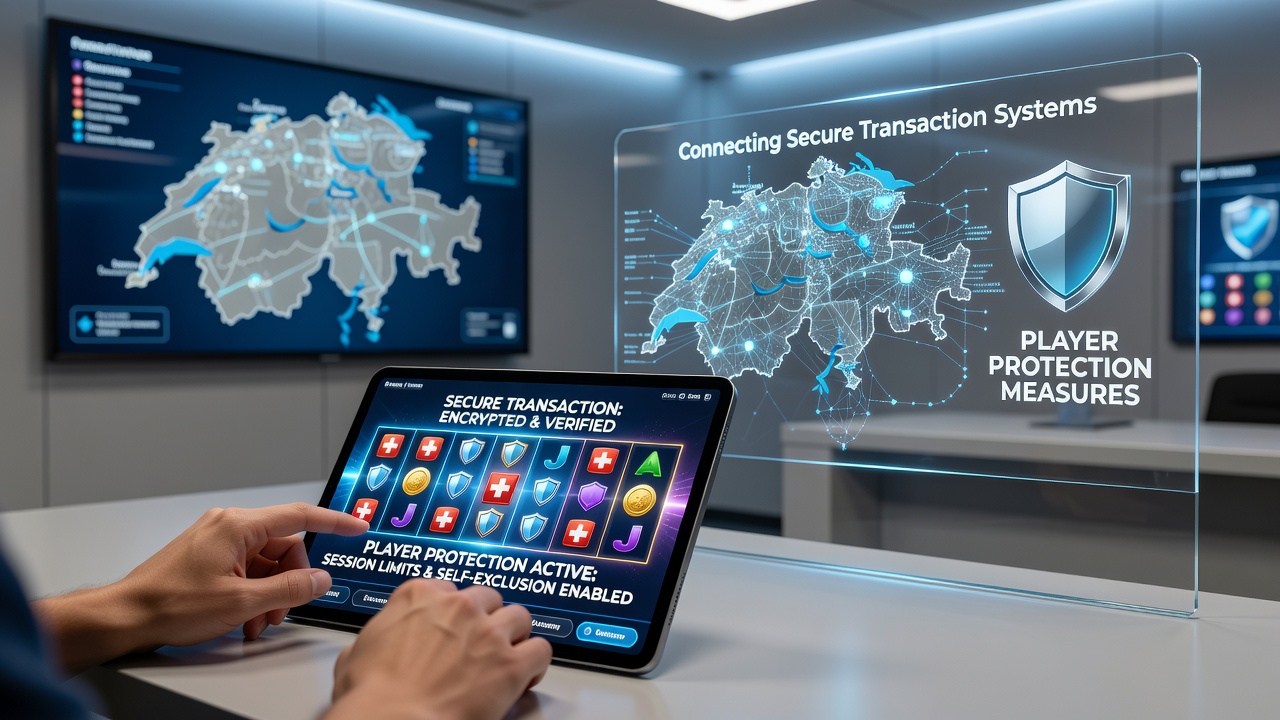
Connecting Secure Transaction Systems with Player Protection Measures in Switzerland's Online Slot Scene
Switzerland maintains a structured regulatory framework for online slots that ties financial transaction security directly to player protection protocols, and licensed operators must comply with both the Federal Act on Gambling and technical standards set by the Swiss Federal Gaming Board. These rules require payment gateways to incorporate real-time verification processes that simultaneously enforce deposit limits, session caps, and self-exclusion lists maintained by the national database.
Secure transaction systems in this market rely on encrypted APIs that connect bank transfers, e-wallets, and card payments to backend risk engines, while data flows trigger automatic checks against player-set thresholds before any funds move. When a user reaches a pre-defined deposit ceiling, the system blocks the transaction at the payment processor level rather than at the game interface, which reduces the chance of manual overrides.
Technical Integration of Payments and Safeguards
Operators link their payment infrastructure to the national self-exclusion register through standardized data-exchange protocols, and this connection allows immediate account freezes across multiple platforms once a player registers for exclusion. Research from Swiss academic institutions shows that such synchronized systems cut unauthorized deposit attempts by measurable margins compared with earlier segregated models.
Payment service providers active in Switzerland must obtain certification that their platforms can process both incoming funds and outgoing withdrawals while logging every limit check in immutable audit trails. These trails support regulatory reviews conducted by the Federal Office of Justice, which examines whether transaction blocks align with documented player protection settings.
Regulatory Requirements and Data Handling
The Swiss framework demands that operators store transaction and limit data on servers located within the country or in jurisdictions that meet equivalent data-protection standards, and encryption keys remain under the control of licensed entities. According to figures published by the Federal Department of Justice and Police, compliance audits in recent years have verified that over 95 percent of active online slot platforms now route all payment authorizations through these integrated protection layers.

Monthly reporting obligations require operators to submit anonymized datasets that detail how often transaction blocks occurred because of limit triggers or exclusion flags. These reports feed into broader statistical analyses conducted by independent research bodies, including studies from European university consortia that track cross-border patterns in responsible gaming metrics.
Industry Implementation and October 2026 Developments
Leading platform providers have rolled out modular software components that allow Swiss licensees to attach protection rules directly to payment workflows without rebuilding entire back-office systems, and several suppliers plan further updates ahead of the 2026 industry calendar. By October 2026, scheduled enhancements to API standards are expected to introduce faster reconciliation between withdrawal requests and cooling-off periods, which will further tighten the link between financial movement and behavioral safeguards.
Payment processors operating in the market already support tokenization methods that strip sensitive card data from gaming servers, and this separation reduces exposure while still permitting real-time limit enforcement. Case examples from Swiss operators demonstrate that tokenized flows combined with automated exclusion checks have lowered the incidence of repeated high-value deposits among flagged accounts.
International Comparisons and Research Inputs
Comparative data from regulatory sources in other jurisdictions, such as the Nevada Gaming Control Board and the Australian Communications and Media Authority, indicate that Switzerland's integrated approach produces similar outcomes in deposit-limit adherence, yet the Swiss model benefits from a single national exclusion database that avoids fragmentation. Academic papers published by research groups at institutions in Canada and the European Union have examined these systems and noted that centralized registers paired with secure payment rails tend to yield higher compliance rates.
Industry associations, including the European Gaming and Betting Association, have compiled technical guidelines that Swiss operators reference when designing new transaction-protection interfaces. These guidelines emphasize auditability, encryption standards, and seamless data exchange with protection registries rather than prescribing specific software vendors.
Conclusion
Switzerland's online slot sector demonstrates a working model in which secure transaction systems and player protection measures operate as interdependent components rather than separate functions. Regulatory mandates, technical certifications, and ongoing data exchanges ensure that payment authorizations respect individual limits and exclusion status at every step. As platforms prepare for further refinements scheduled through October 2026, the architecture continues to evolve around verifiable connections between financial flows and responsible gaming controls.